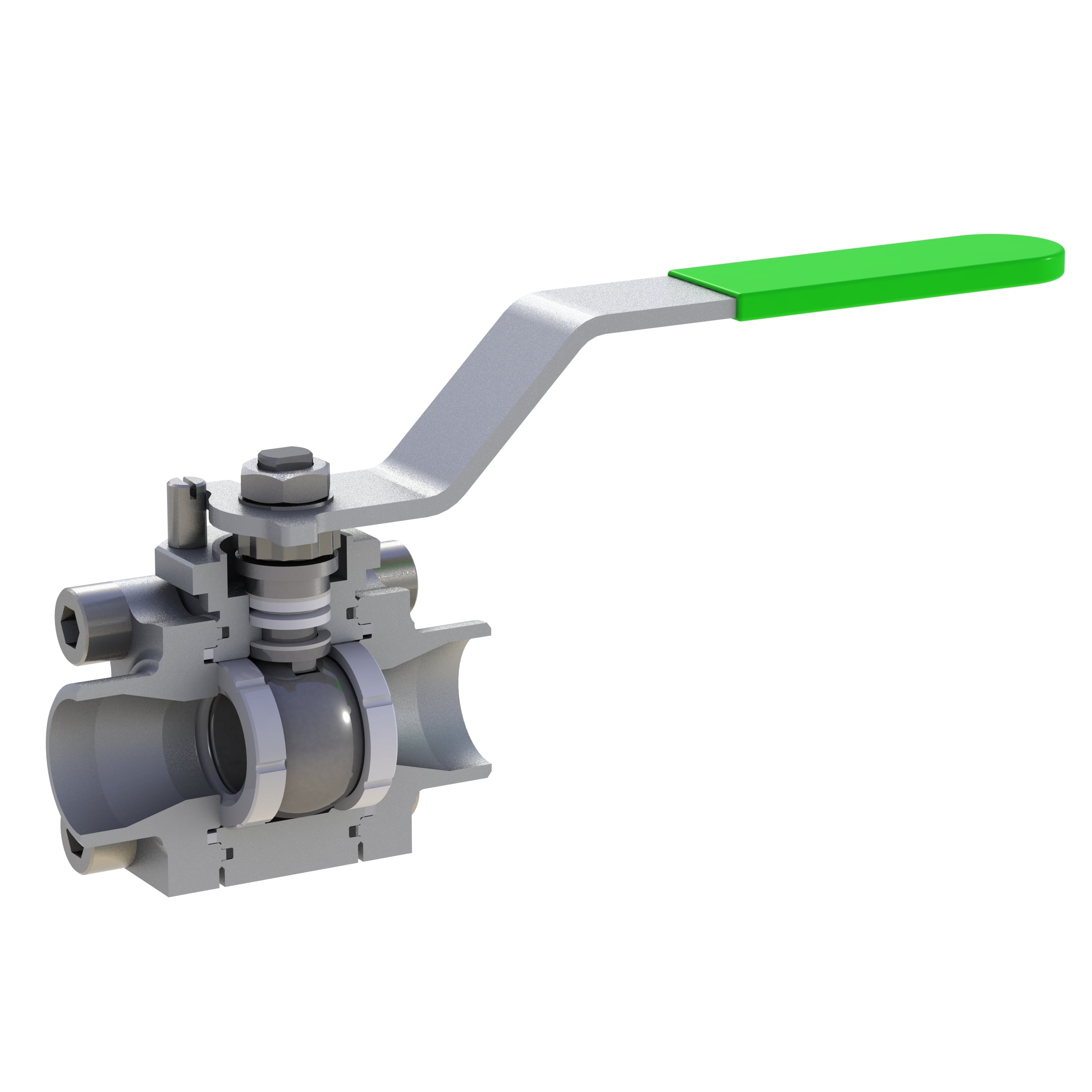
Ball valves are widely used where reliable shutoff, compact construction and fast quarter-turn operation are required. The operating principle is simple, but the correct valve depends on the complete service conditions - not only line size and pressure class.
Media, pressure, temperature, materials, sealing performance, operating frequency, automation, safety requirements and the installation environment all affect long-term performance. These factors become especially important in hydrogen, LNG, cryogenic, high-pressure and other critical applications.
Habonim develops industrial ball valves and valve automation solutions for demanding applications, backed by more than 75 years of engineering and manufacturing experience.
What Is a Ball Valve and How Does It Work?
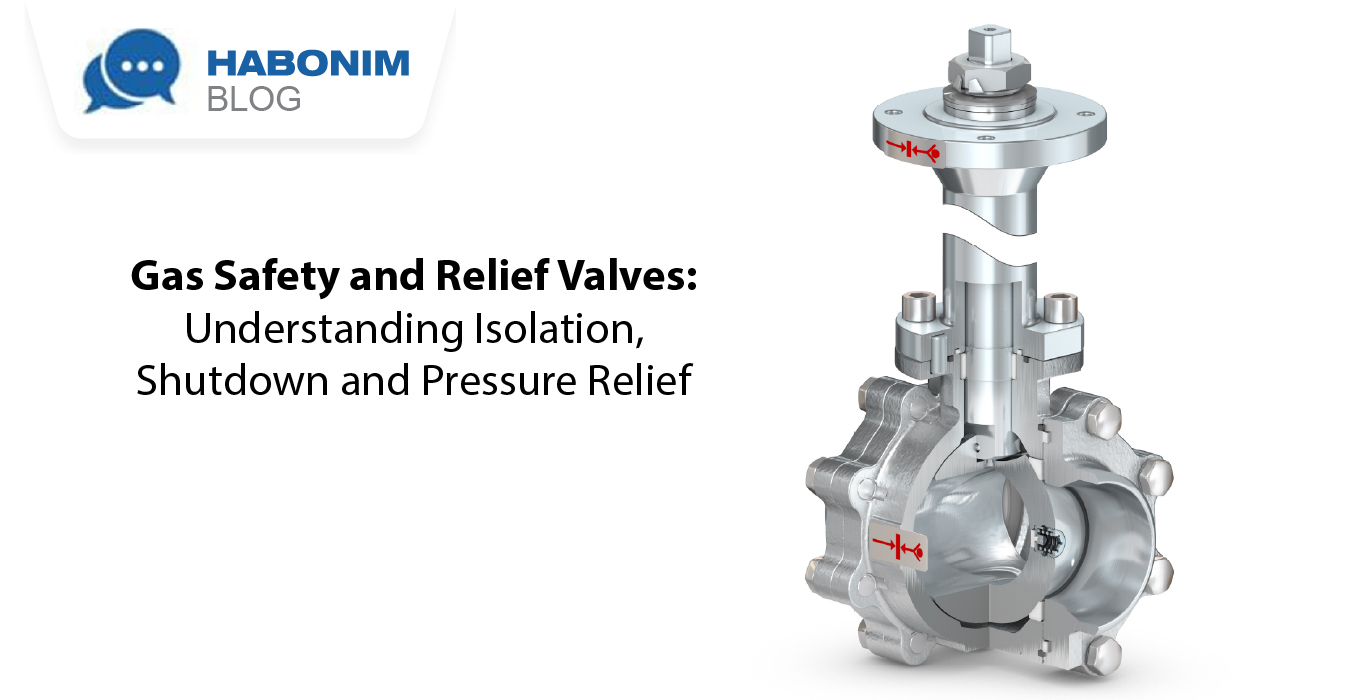
A ball valve is a quarter-turn valve that uses a spherical closure element to isolate or direct the flow of liquids or gases. The ball contains a bore through its center. When the bore is aligned with the pipeline, the valve is open; rotating the ball by 90 degrees moves the solid part of the ball across the flow path and closes the valve.
This design can provide:
- Fast quarter-turn operation
- Reliable shutoff
- Compact construction
- Compatibility with manual or automated operation
- Suitability for a wide range of industrial media and service conditions
- Tight inline shutoff and external leakage control
- Fire-safe construction
- Low- or high-temperature operation
- Frequent cycling or rapid emergency shutdown
- Material traceability and cleanliness
- Applicable pressure-equipment, hazardous-area, marine or functional-safety requirements
- Materials suitable for hydrogen service
- Stem and body-joint sealing performance
- Pressure-temperature rating
- Fire-safe and fugitive-emission requirements
- Cleaning and assembly requirements
- Qualification for the specific equipment or application
- Bidirectional full-differential-pressure floating-ball technology
- Spring-loaded seats
- Integral cavity-pressure-relief functionality
- Extended stems or bonnets
- Dedicated cryogenic cleaning and assembly procedures
- Total HermetiX™ sealing technology
- HermetiX™ stem sealing with zero-fugitive-emission capability
- Testing or certification to ISO 15848-1 and API 641
- Stem sealing tested for up to 500,000 maintenance-free cycles
- Double-sealed body and bonnet connections
- Fire-safe construction
- Enhanced inline sealing and self-relieving seat options
- COMPACT™: a four-piston rack-and-pinion actuator designed to provide high torque from a compact, balanced package.
- POWER COMPACT™: a four-piston Scotch-yoke actuator designed for higher torque, including strong start and end torque in a compact package.
- Select a ball valve from the complete operating envelope—not size and pressure class alone.
- Match the valve design to its function: isolation, diversion, emergency shutdown or control.
- Hydrogen and cryogenic services require application-specific materials, sealing, testing and approvals.
- Confirm that every stated certification applies to the selected series, size and configuration.
- Size the valve and actuator as one package, using actual torque, speed, fail-position and supply conditions.
Although ball valves are primarily used for isolation, specially designed and correctly sized control-ball-valve packages can also provide modulating flow control.
Main Types of Industrial Ball Valves
Ball valves can be classified by ball support, body construction, bore, port arrangement and seat technology. These categories are complementary: one valve may, for example, be a three-piece, full-bore, soft-seated floating ball valve.
|
Design category |
Common options |
Typical selection consideration |
|
Ball support |
Floating / trunnion-mounted |
Floating designs are compact and widely used; trunnion designs manage higher loads in larger sizes and higher-pressure services. |
|
Body construction |
One-, two- or three-piece |
Construction affects maintenance access, end connections, weight and installation. |
|
Bore |
Full bore / reduced bore |
Full bore minimizes flow restriction; reduced bore can reduce size, weight and cost. |
|
Port arrangement |
Two-way / three-way / multiport |
The required flow path determines whether the valve isolates, diverts or mixes media. |
|
Seat technology |
Soft-seated / metal-seated |
Temperature, media, leakage class, contamination and cycling determine the appropriate sealing technology. |
Application-Specific Ball Valve Designs
Beyond their basic construction, ball valves may be engineered for a particular duty or environment.
Cryogenic Ball Valves
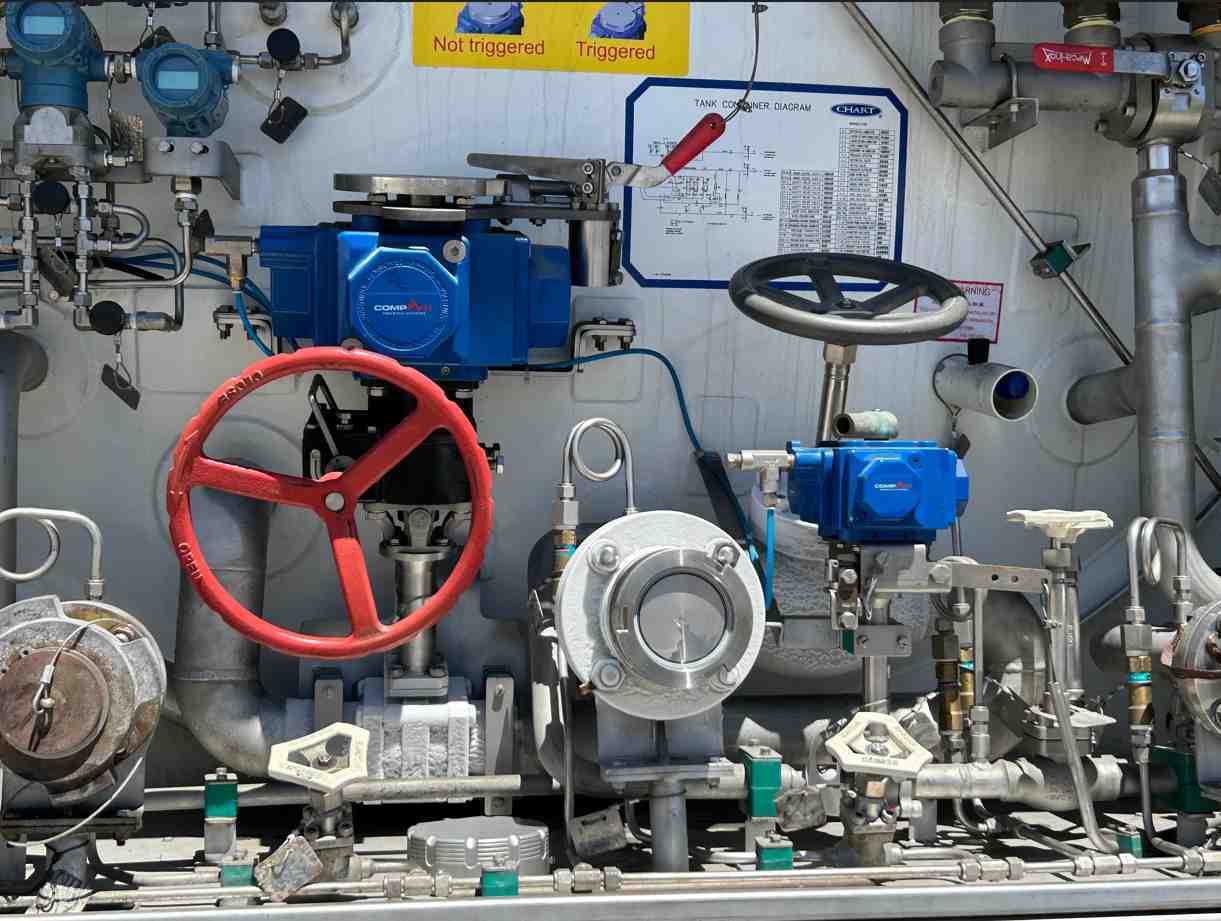
Cryogenic media create challenges that do not exist in conventional service. Materials, stem extension, seat behavior, cleanliness and safe management of pressure trapped in the body cavity must all be considered. Habonim's cryogenic portfolio includes bidirectional floating-ball designs, spring-loaded seats and integral cavity-pressure-relief functionality for applicable valve series.
High-Pressure and Hydrogen Ball Valves
High-pressure valves require body, stem and sealing systems capable of maintaining integrity under substantial mechanical loads. Hydrogen adds further considerations, including material compatibility, permeation, external leakage and the requirements of the specific application - from production and compression to storage, transport, refueling and end use.
Control Ball Valve Packages
When a ball valve is used for modulating service, its trim geometry, flow coefficient, rangeability, actuator sizing and control accessories must be selected as one engineered package. A standard on/off ball valve should not automatically be used for throttling duty.
Common Industrial Applications
Ball valves are used across chemical processing, petrochemical, energy, industrial gases, marine systems, LNG, hydrogen, pharmaceuticals and other process industries. The required design depends on the consequences of leakage or failure and on the operating conditions throughout normal, start-up, shutdown and upset scenarios.
For critical service, selection may need to address:
Ball Valves for Hydrogen Applications
Hydrogen service varies significantly across the value chain. An electrolyzer balance-of-plant valve, a high-pressure transport valve and a cryogenic liquid-hydrogen valve do not share the same operating envelope. Selection should therefore start with the actual pressure, temperature, media state, cycling profile, leakage limits and regulatory requirements.
Relevant considerations may include:
Selected Habonim valve series are tested or certified to applicable hydrogen, pressure-equipment and hazardous-area requirements, which may include ISO 19880-3, ISO 23826, PED, UKCA, TPED and ATEX. Certification must always be confirmed for the specific valve series, size, pressure rating and application.
Ball Valves for LNG and Cryogenic Applications
LNG and other cryogenic fluids operate at temperatures that can change material behavior, component dimensions and sealing performance. Dedicated cryogenic valves are therefore engineered and tested for the intended low-temperature service.
Depending on the valve series and application, Habonim cryogenic technology can include:
The required configuration must be selected according to the media, minimum design temperature, pressure, installation orientation and applicable project specifications.
How to Choose the Right Industrial Ball Valve
A reliable selection begins with a complete operating-data sheet. The following factors should be evaluated together.
1. Process Media
Identify the fluid, concentration, phase, impurities and any cleaning or contamination limits. All wetted materials - including body, ball, stem, seats and seals - must be compatible with the media.
2. Pressure and Temperature
Define the minimum, normal and maximum pressure and temperature, including start-up, shutdown and upset conditions. Use the valve's pressure-temperature rating rather than the nominal pressure class alone.
3. Valve Function
Determine whether the valve is required for isolation, diversion, emergency shutdown or modulating control. The function affects port configuration, bore, seat design, operating torque and automation.
4. Sealing Requirements
Consider both inline leakage through the closed valve and external leakage through the stem, body joints and other interfaces. Hazardous, flammable and low-molecular-weight gases may require certified fugitive-emission performance.
5. Operating Frequency and Service Life
Record expected cycles, operating speed, dwell periods and maintenance constraints. High-cycle or fast-acting service can influence seat selection, actuator sizing and accessory design.
6. Automation and Fail Position
For automated valves, define the available power or air supply, required opening and closing time, control signal, fail-safe position and environmental conditions. Size the actuator using the valve torque throughout the complete operating envelope, with an appropriate safety factor.
7. Safety, Standards and Approvals
Identify all project-specific requirements before selecting the valve. Depending on the application, these may include fugitive-emission and fire-safe testing, ATEX, NACE material requirements, marine type approvals, pressure-equipment compliance and SIL capability. Approval status varies by valve family and configuration and must be verified against the relevant certificate.
8. Installation and Maintenance
Check space, weight, piping loads, flow direction, accessibility, orientation, end connections and maintenance strategy. The most suitable valve is the one that meets both the process duty and the practical installation requirements.
Sealing Integrity and Fugitive Emissions
External leakage can create safety, environmental and operational risks. Potential leakage paths include the stem and the connections between valve-body sections.
Habonim's Total HermetiX™ Integrity Package is available across applicable valve families and combines stem, body and inline sealing features. Depending on the series, these may include:
The exact features and certifications should be confirmed for the selected valve configuration.
Fire Safety and Industrial Certifications
Certification requirements vary by industry, location and application. Depending on the relevant valve series and configuration, Habonim products may be tested, certified or assessed against requirements such as ISO 15848-1, API 641, API 607, ISO 10497, ATEX, NACE material requirements and SIL 2 or SIL 3 capability.
These terms are not interchangeable: fire testing, fugitive-emission testing, hazardous-area compliance and functional-safety assessment address different risks. Always review the applicable certificate, its scope and any limitations before specifying the valve.
Ball Valves and Valve Automation
Quarter-turn operation makes ball valves well suited to automation. A complete valve-and-actuator package should be selected according to required torque, operating speed, cycle frequency, fail position, air consumption, available space, weight and control accessories- not actuator torque alone.
Habonim offers two related four-piston pneumatic actuator technologies:
The shorter piston travel and balanced design can support fast operation, reduced package size and lower air consumption compared with conventional actuators selected for equivalent torque. Final actuator selection must be based on the valve torque and actual supply conditions.
Quality and Reliability in Demanding Applications
Valve reliability depends on design, material control, manufacturing consistency, testing and correct application. Habonim combines more than 75 years of valve experience with engineering, traceability and quality processes for demanding industrial markets.
For a critical application, users should review not only catalogue ratings but also the relevant certificates, test methods, material documentation, maintenance requirements and demonstrated performance of the complete valve package.
Frequently Asked Questions
What are the main types of industrial ball valves?
Ball valves may be floating or trunnion-mounted; one-, two- or three-piece; full- or reduced-bore; two-way, three-way or multiport; and soft- or metal-seated. The correct combination depends on the service conditions and valve function.
Can every ball valve be used for flow control?
No. Standard ball valves are primarily isolation devices. Modulating service requires a valve and trim designed for control, correct sizing and an actuator and control package suitable for the duty.
What should be considered for cryogenic service?
Key factors include minimum temperature, materials, sealing, stem extension, cleanliness, installation orientation and safe relief of pressure trapped in the body cavity.
What should be considered for hydrogen service?
Selection depends on the location in the hydrogen value chain and the actual pressure, temperature, state of the media, cycling, material compatibility, leakage limits and applicable approvals.
Can ball valves be automated?
Yes. Pneumatic, electric or hydraulic actuators can be used for remote operation, process control, emergency shutdown and high-cycle service. The actuator must be sized as part of the complete valve package.
Key Takeaways
- Select a ball valve from the complete operating envelope - not size and pressure class alone.
- Match the valve design to its function: isolation, diversion, emergency shutdown or control.
- Hydrogen and cryogenic services require application-specific materials, sealing, testing and approvals.
- Confirm that every stated certification applies to the selected series, size and configuration.
- Size the valve and actuator as one package, using actual torque, speed, fail-position and supply conditions.
For support selecting a ball valve or automated package for a demanding application contact Habonim or use the product catalogue and sizing tools available at www.habonim.com