Selecting a ball valve for low differential pressure service requires more than checking its maximum pressure rating.
A valve designed to withstand high pressure does not automatically guarantee reliable shutoff when the pressure differential is low.
In industrial applications, seat design, sealing force, flow capacity and operating conditions all influence valve performance, particularly when the available pressure differential is limited.
Understanding these factors helps engineers select the right ball valve for reliable isolation, efficient flow and long-term operation.
Why Does Low Differential Pressure Matter?
Some ball valve designs rely partly on process pressure to generate the sealing force between the ball and the seat.
When the pressure differential decreases, the force supporting the sealing contact may also decrease.
This means a valve that seals effectively under high differential pressure may require additional evaluation to confirm its performance under low differential pressure conditions.
The key consideration is not simply how much pressure a valve can withstand, but how effectively it seals across the entire operating range.
For this reason, engineers should verify shutoff performance at the minimum expected differential pressure, not only at the maximum design pressure.
How Ball Valve Seat Design Affects Sealing
Industrial ball valves typically operate through a quarter-turn mechanism. Rotating the ball 90 degrees moves it between the open and closed positions.
However, closing the valve is only part of achieving reliable isolation.
Actual sealing performance depends on the interaction between the ball, valve seats, seat materials, pressure differential and seat-loading mechanism.
Two common designs illustrate why these factors matter.
Floating Ball Valves
In a floating ball valve, the ball is supported by the valve seats and can move slightly under differential pressure.
When the valve is closed, upstream pressure pushes the ball toward the downstream seat, helping establish the sealing contact.
Floating ball valves offer compact construction and are widely used for industrial isolation.
At low differential pressure, however, the sealing performance depends on the specific seat design, initial seat loading and operating conditions.
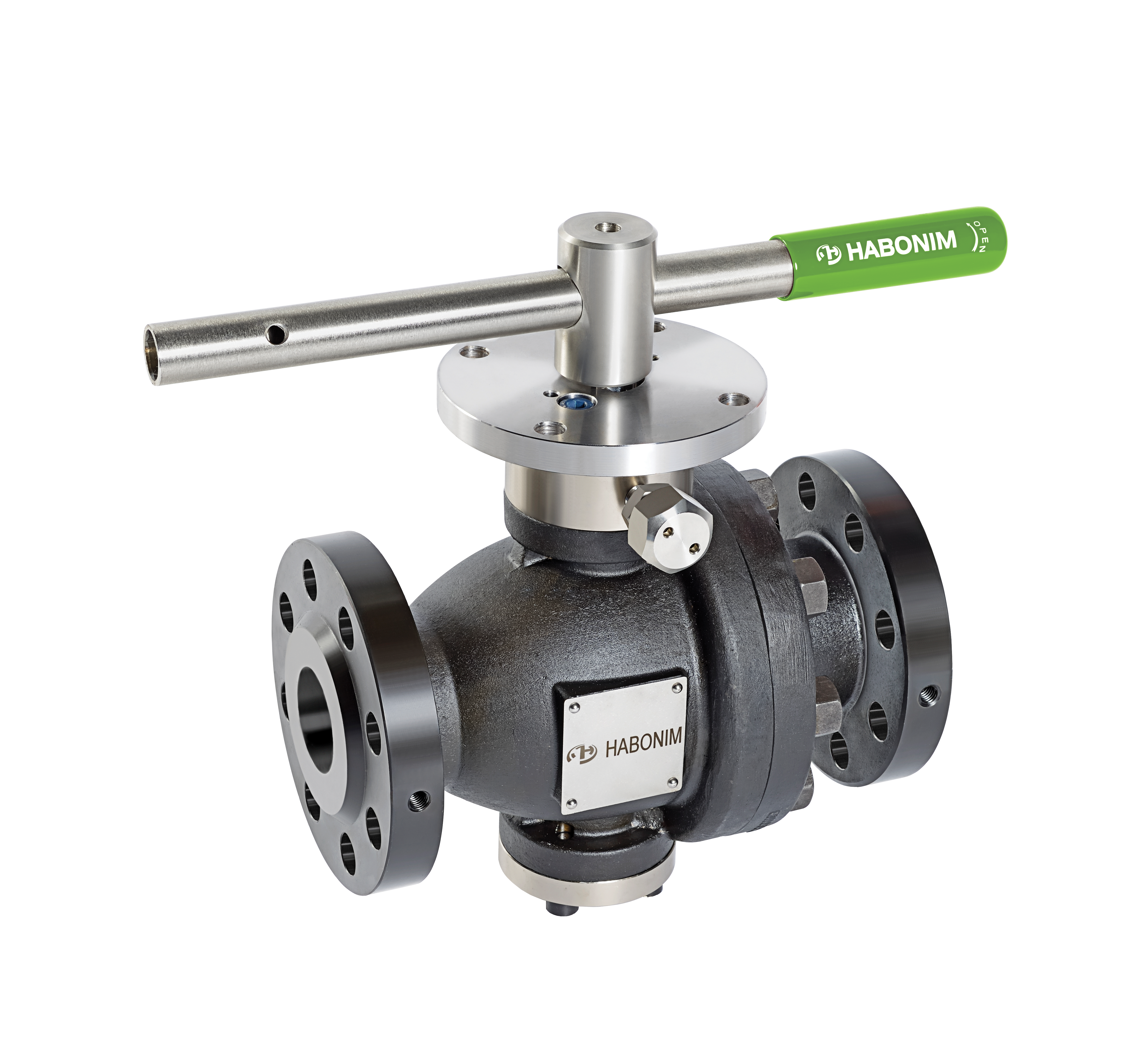
Habonim offers a range of industrial floating ball valves in different configurations, materials and pressure classes.
Trunnion-Mounted Ball Valves
Unlike floating ball valves, trunnion-mounted designs mechanically support the ball while allowing the seats to move toward it.
Depending on the design, spring-loaded seats provide initial contact force independently of process pressure.
This can be particularly valuable in applications requiring reliable shutoff across a wide range of differential pressures.
For example, Habonim's 81 Series trunnion-mounted ball valves incorporate Inconel springs designed to assist low-pressure sealing.
The spring-assisted seat arrangement helps maintain contact between the seat and ball when process pressure alone may not provide sufficient sealing force.
The required leakage performance must still be confirmed for the specific application.
High Pressure Rating vs. Low-Pressure Sealing
A common misconception is that a valve with a high pressure rating will automatically perform well at lower pressures.
While a high-pressure-rated valve may be suitable for low-pressure service, its pressure class alone does not establish its minimum-pressure shutoff capability.
Engineers should evaluate several factors:
- Minimum and maximum operating pressures
- Differential pressure across the closed valve
- Seat design and seat-loading mechanism
- Seat material and compatibility
- Required shutoff or leakage performance
- Process media and temperature
- Operating torque
The selected valve should meet the application's actual operating requirements rather than being chosen solely according to its maximum pressure rating.
Flow Capacity and Pressure Drop in Low-Pressure Systems
Sealing performance is not the only consideration.
In systems with limited available pressure, unnecessary pressure loss can affect flow rates and overall process efficiency.
When a ball valve is fully open, its internal flow passage influences the pressure drop across the valve.
For on/off isolation applications, a suitable full-bore ball valve can help reduce flow restriction.
Engineers should evaluate the required flow coefficient, Cv or Kv, together with the complete piping arrangement and acceptable system pressure drop.
For applications requiring continuous flow regulation rather than isolation, a purpose-designed control valve is generally the appropriate solution.
Habonim's control valve portfolio includes solutions for industrial flow and pressure control.
Standard isolation ball valves should not be used for continuous throttling unless specifically designed and approved for that service.
Where Is Low Differential Pressure Performance Important?
Low differential pressure conditions occur across a variety of industrial applications.
Industrial Process Isolation
Valves installed around pumps, tanks and processing equipment may experience changing pressure conditions during startup, shutdown, maintenance and normal operation.
Reliable isolation must therefore be evaluated across the expected pressure range.
Industrial Gas Systems
Gas systems can experience varying operating pressures and relatively small pressure differentials across closed valves.
Seat design and leakage requirements are particularly important when dependable gas isolation is required.
LNG and Cryogenic Applications
LNG transfer and cryogenic systems may include operating conditions with relatively low differential pressure.
However, pressure is only one part of the selection process.
Engineers must also evaluate cryogenic temperature, material compatibility, sealing integrity and applicable safety requirements.
A valve suitable for low-pressure water service, for example, is not automatically suitable for low-pressure LNG.
Industrial Water and Fluid Systems
In water distribution and industrial fluid systems, excessive pressure drop can reduce available flow and affect system performance.
Valve selection should therefore consider both sealing reliability and flow capacity.
Automated Ball Valves at Low Differential Pressure
Low differential pressure applications may also require remote operation, automated isolation or integration into industrial control systems.
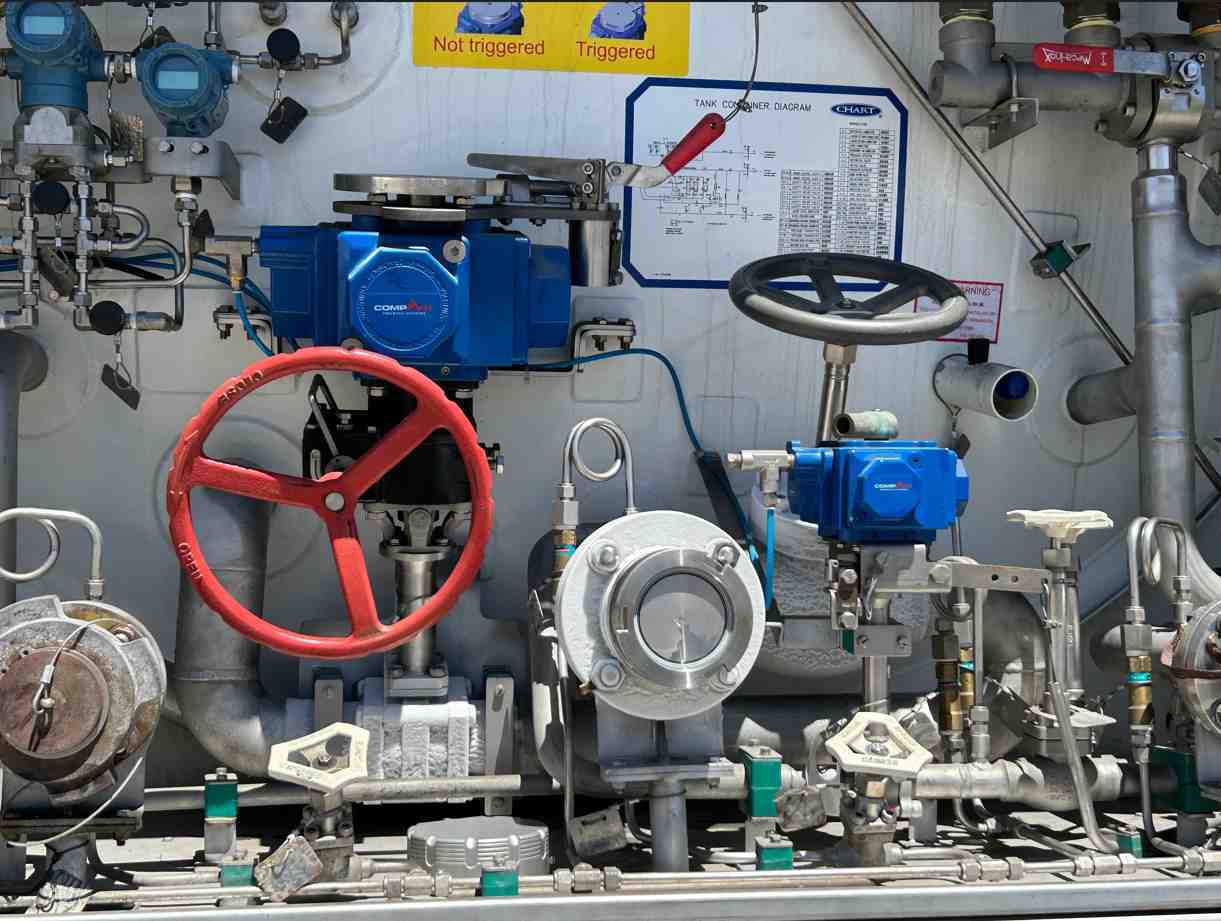
Ball valves can be combined with pneumatic actuators and control accessories to meet these requirements.
When specifying an automated valve assembly, engineers should consider:
- Valve operating torque across the full pressure range
- Actuator sizing and available air supply
- Required opening and closing times
- Operating frequency
- Fail-safe position
- Control system integration
Low differential pressure does not automatically mean low operating torque.
Valve torque depends on several factors, including seat loading, pressure conditions, materials and valve design.
Habonim's pneumatic actuator solutions, including the CompAct range, can be integrated into automated ball valve assemblies according to the application's requirements.
Key Factors When Selecting a Ball Valve for Low Differential Pressure
Before selecting a valve, engineers should establish five essential requirements.
1. Operating Pressure Range
Identify the minimum, normal and maximum operating pressures, including the differential pressure across the valve during shutoff.
2. Required Sealing Performance
Confirm that the valve can achieve the required shutoff performance at the lowest expected differential pressure.
3. Seat Design and Materials
Evaluate the seat configuration, initial sealing force, process media, temperature and material compatibility.
4. Flow Capacity
Determine the required flow rate, Cv or Kv, acceptable pressure drop and whether a full-bore configuration is necessary.
5. Valve Function and Automation
Define whether the valve is intended for on/off isolation, flow regulation or automated process control, including any fail-safe requirements.
Key Takeaways
- High pressure rating does not automatically guarantee low-pressure sealing. Shutoff performance should be verified at the minimum expected differential pressure.
- Seat design matters. Spring-assisted seat arrangements can help maintain sealing contact when process pressure is limited.
- Floating and trunnion-mounted valves operate differently. Their sealing mechanisms should be evaluated according to the application.
- Pressure drop matters. In systems with limited available pressure, adequate flow capacity is essential.
- Application conditions determine valve selection. Gas, LNG, cryogenic, water and industrial process systems may all require different materials, configurations and sealing performance.
- Automation requires proper sizing. Actuator selection should reflect the actual valve torque requirements across the complete operating range.
Selecting the Right Ball Valve for Your Application
Reliable valve performance begins with understanding the complete operating conditions, including both maximum and minimum pressure requirements.
Habonim develops industrial ball valves, control valves and automated valve solutions for demanding process applications.
From floating ball valves to spring-assisted trunnion-mounted designs, selecting the appropriate configuration helps achieve reliable isolation and efficient system operation.
Explore Habonim's industrial valve portfolio or contact our engineering team to discuss your application requirements.