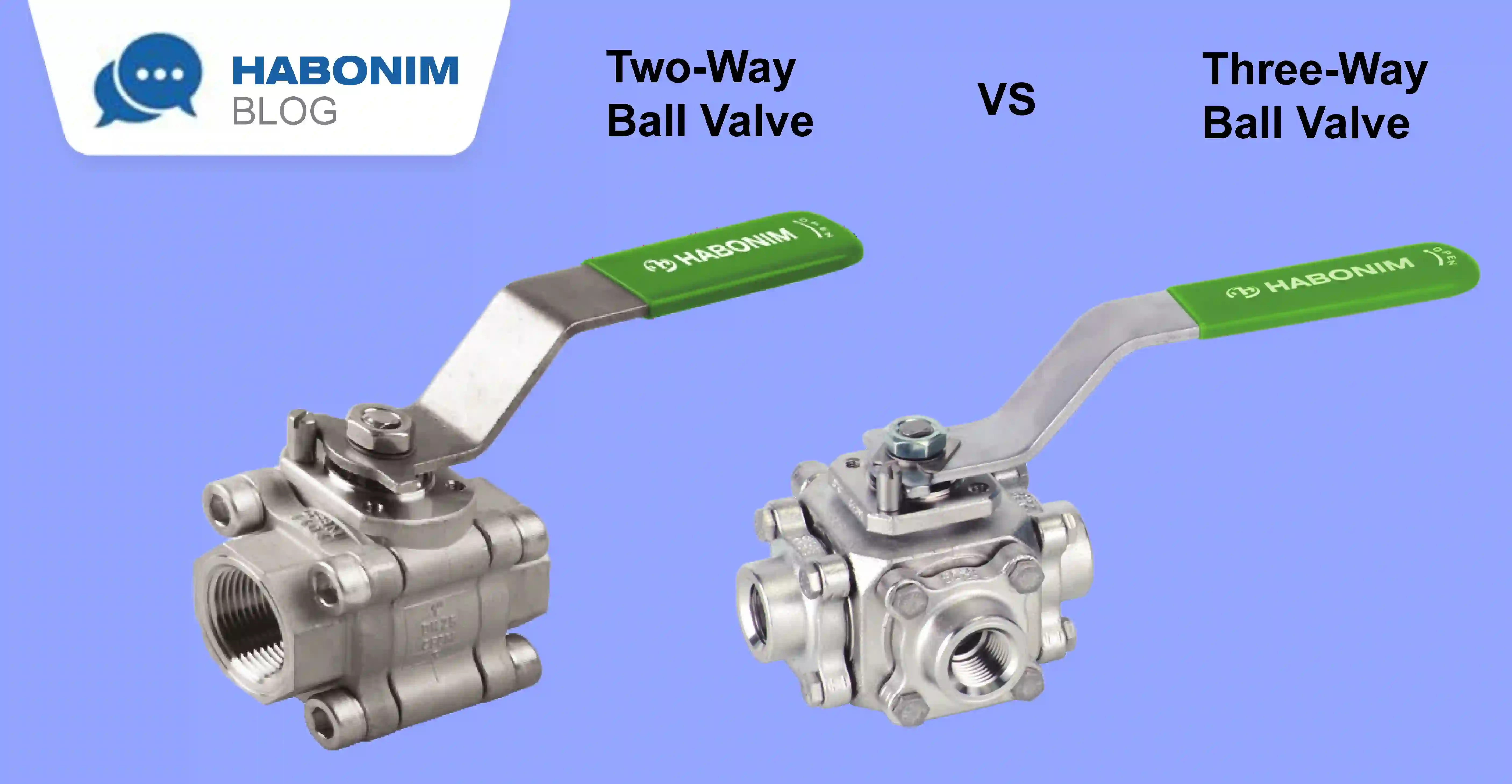
Industrial processes rely on precise flow control to maintain safety, efficiency and reliable operation. While ball valves are widely recognized for their durability and dependable shut-off performance, selecting the appropriate valve configuration is equally important. One of the most common decisions engineers face is choosing between a two-way and a three-way ball valve.
Although both designs are based on the same operating principle, they serve different functions within a piping system. Understanding their capabilities allows engineers to simplify system design, improve operational flexibility and reduce installation and maintenance costs.
At Habonim, decades of experience in ball valve engineering have resulted in a broad portfolio of two-way and three-way valve solutions designed to perform in demanding applications across the energy, chemical, hydrogen, LNG and industrial process industries.
Understanding Two-Way Ball Valves
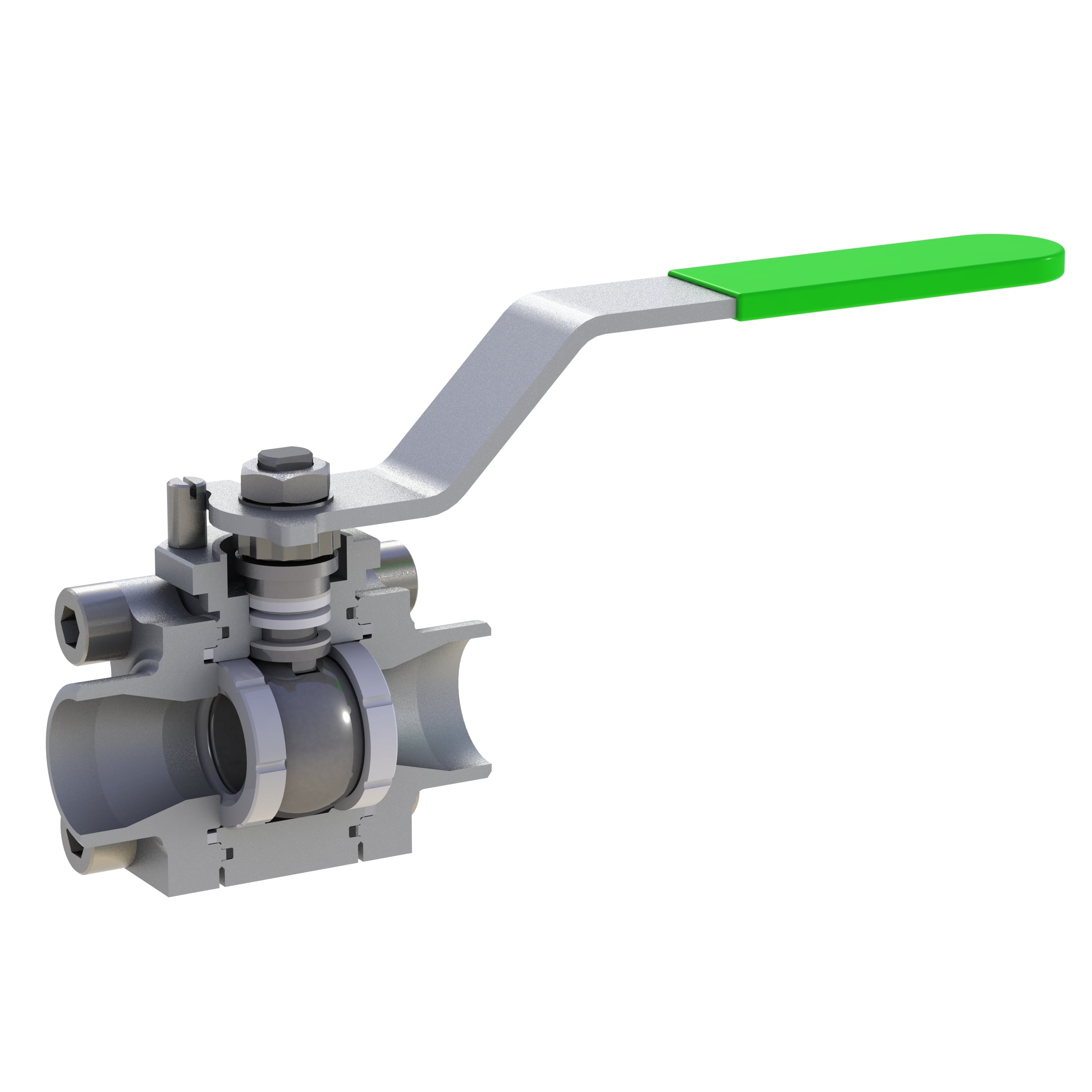
The two-way ball valve is the most common valve configuration used in industrial systems. It features one inlet and one outlet, providing straightforward on/off flow control.
When the valve is open, media flows directly through the valve with minimal pressure drop. Rotating the ball 90 degrees shuts off the flow completely, providing reliable isolation.
Two-way ball valves are commonly used for:
- Process isolation
- Equipment shutdown
- Utility systems
- Gas distribution
- Water treatment
- Steam applications
- Chemical processing
Their simple construction, high reliability and long service life make them the preferred choice wherever a single flow path requires dependable control.
Understanding Three-Way Ball Valves
A three-way ball valve incorporates three ports instead of two, allowing it to direct, divert, or mix fluid flow within a single valve body.
Rather than installing multiple valves and fittings, engineers can often achieve the same functionality with one compact three-way valve. This reduces system complexity while simplifying installation and maintenance.
Three-way ball valves are typically used for:
- Flow diversion
- Flow mixing
- Equipment bypass
- Process switching
- Heat transfer systems
- Cooling and heating circuits
- Sampling systems
By combining multiple functions into a single valve, three-way designs help reduce piping, minimize potential leak paths and improve overall system efficiency.
Two-Way vs. Three-Way Ball Valves: Comparison
The table below summarizes the key differences between two-way and three-way ball valves.
|
Feature |
Two-Way Ball Valve |
Three-Way Ball Valve |
|
Number of ports |
Two ports: one inlet and one outlet |
Three ports |
|
Primary purpose |
On/off isolation and shut-off |
Diverting, mixing, splitting, bypassing, or switching flow |
|
Flow path |
One direct flow path |
Multiple selectable flow paths using L-Port or T-Port configurations |
|
Typical applications |
Process isolation, equipment shutdown, utilities, gas distribution, water treatment, steam, and chemical processing |
Flow diversion, mixing, equipment bypass, process switching, heat transfer, cooling and heating circuits, and sampling systems |
|
Piping impact |
Simple installation for a single line |
Can replace multiple valves and fittings, reducing piping complexity and potential leak paths |
|
Key advantages |
Reliable shut-off, low operating torque, long service life, and cost-effective installation |
Greater operational flexibility, fewer connections, and compact system design |
|
Automation |
Can be automated with pneumatic or electric actuators |
Can be automated with pneumatic or electric actuators |
|
Best suited for |
Applications requiring dependable control of one flow path |
Applications requiring multiple flow paths within a compact layout |
L-Port vs. T-Port Configurations
Three-way ball valves are generally available in two primary flow patterns: L-Port and T-Port.
L-Port Ball Valves
An L-Port ball connects one inlet to one of two outlets. This design is primarily used for flow diversion, allowing operators to switch flow between two different process lines.
Typical applications include:
- Switching between process equipment
- Selecting alternate flow paths
- Directing media to backup systems
- Process changeover operations
T-Port Ball Valves
A T-Port ball contains a T-shaped flow passage that enables more complex flow patterns.
Depending on the valve position, it can:
- Mix two incoming flows
- Split one flow into two outlets
- Connect all three ports simultaneously (depending on the configuration)
T-Port valves are commonly used where greater process flexibility is required.
Selecting the appropriate flow pattern depends on the specific application and desired operating sequence.
Benefits of Two-Way Ball Valves
For straightforward isolation applications, two-way valves offer several advantages.
Their simple design contributes to excellent reliability and minimal maintenance requirements. Fewer internal components reduce potential wear while allowing for fast quarter-turn operation.
Additional benefits include:
- Compact installation
- Reliable shut-off performance
- Low operating torque
- Long service life
- Easy automation
- Cost-effective installation
These characteristics make two-way ball valves an excellent choice for the majority of industrial isolation applications.
Benefits of Three-Way Ball Valves
Three-way valves provide advantages that extend beyond simple flow control.
By integrating multiple functions into one valve body, they help engineers optimize piping layouts and reduce the number of installed components.
Key benefits include:
- Reduced piping complexity
- Fewer fittings and connections
- Lower installation costs
- Reduced potential leak points
- Improved maintenance accessibility
- Greater operational flexibility
- Compact system design
In applications where space is limited or multiple flow paths are required, these advantages can significantly improve overall system performance.
Automation Enhances Performance
Both two-way and three-way ball valves can be automated using pneumatic or electric actuators, enabling remote operation and integration with plant control systems.
Valve automation provides several operational advantages, including:
- Faster response times
- Improved process consistency
- Enhanced personnel safety
- Reduced manual intervention
- Remote operation
- Greater system reliability
Habonim's CompAct™ pneumatic actuators are specifically engineered for demanding industrial environments, delivering high torque, compact dimensions and millions of maintenance-free operating cycles. For applications requiring even greater torque density, the patented Power CompAct™ actuator provides exceptional performance while reducing size, weight and compressed air consumption.
Designed for Demanding Applications
Valve performance is especially critical in industries operating under extreme pressures, temperatures, or challenging process conditions.
Habonim designs both two-way and three-way ball valves for demanding applications where reliability cannot be compromised.
Our valve solutions are widely used in:
- Hydrogen production and refueling
- LNG and cryogenic systems
- Chemical processing
- Oil and gas facilities
- Industrial manufacturing
- Power generation
- Process automation systems
Advanced sealing technologies, high-quality materials and the Total HermetiX™ Integrity Package help ensure reliable performance while supporting safety, environmental compliance and long service life.
Selecting the Right Valve
Choosing between a two-way and three-way valve depends on the function the valve must perform within the process.
A two-way valve is typically the preferred solution when the objective is straightforward isolation or shut-off.
A three-way valve is often the better choice when the application requires diverting flow, mixing media, or switching between multiple process lines while minimizing piping complexity.
Evaluating flow requirements, operating conditions, automation needs and long-term maintenance objectives early in the design phase helps ensure the most efficient solution.
Frequently Asked Questions (FAQ)
What is the difference between a two-way and a three-way ball valve?
A two-way ball valve controls flow between one inlet and one outlet, while a three-way ball valve has three ports that allow it to divert, mix, or switch flow between multiple process lines.
When should a three-way ball valve be used?
Three-way ball valves are ideal for applications involving flow diversion, mixing, bypass systems, or switching between different process paths.
What is the difference between an L-Port and a T-Port valve?
An L-Port valve is primarily designed for diverting flow between two outlets, while a T-Port valve offers more versatile flow patterns, including mixing and splitting flow.
Can two-way and three-way valves be automated?
Yes. Both configurations can be equipped with pneumatic or electric actuators for remote operation, improved safety and integration with automated control systems.
Why choose Habonim ball valves?
Habonim combines decades of engineering expertise with advanced sealing technologies, proven valve automation solutions and products designed to perform reliably in demanding industrial applications worldwide.
Key Takeaways
- Two-way ball valves are best suited for straightforward isolation and shut-off applications with a single flow path.
- Three-way ball valves provide greater flexibility for diverting, mixing, bypassing, or switching flow between multiple process lines.
- Using a three-way valve can reduce piping complexity, fittings, and potential leak points by combining multiple functions in one valve.
- Both two-way and three-way valves can be automated with pneumatic or electric actuators for remote operation and integration with control systems.
- The right valve configuration depends on flow requirements, operating conditions, automation needs, and maintenance objectives.
- Proper valve selection can help reduce installation costs, improve operational flexibility, and increase long-term system reliability.
👉 Consult with one of our experts