Industrial facilities are under constant pressure to improve efficiency, enhance safety, and reduce downtime. As processes become more automated and performance requirements continue to increase, valve automation has evolved from a convenience into a critical operational necessity.
At Habonim, we have spent decades helping customers meet these challenges with advanced ball valve and valve automation solutions designed to perform in demanding applications worldwide. By combining robust valve technology with innovative actuation systems, operators can achieve greater reliability, improved process control, and long-term operational confidence.
Why Valve Automation Matters
Manual valve operation can be effective in simple systems, but modern industrial processes often require fast response times, remote operation, repeatability, and seamless integration with digital control systems.
Valve automation helps facilities improve operational efficiency, reduce human intervention, enhance personnel safety, minimize process variability, increase system uptime, and support predictive maintenance strategies. Whether in hydrogen production, LNG facilities, chemical processing, energy infrastructure, or industrial manufacturing, automated valve solutions help operators maintain consistent performance under challenging operating conditions.
The Role of Actuators in Automated Valve Systems
An actuator converts energy into mechanical motion, enabling a valve to open, close, or modulate automatically. While often overlooked, the actuator is one of the most critical components in any automated valve assembly. It directly influences response time, torque delivery, reliability, maintenance requirements, and overall lifecycle performance.
Selecting the right actuator is therefore essential for achieving dependable valve operation throughout the life of the system.
Electric vs. Pneumatic Valve Actuators
One of the most common questions when designing an automated valve system is whether to use an electric or pneumatic actuator. Both technologies offer distinct advantages depending on the application.
Pneumatic actuators are widely preferred in industrial processing because they provide fast response times, high torque output, simple mechanical design, and excellent reliability in demanding environments. They are particularly well suited for high-cycle applications, hazardous locations, and facilities where compressed air is readily available.
Electric actuators, on the other hand, offer precise positioning, easy integration with digital control systems, and eliminate the need for compressed air infrastructure. They are often selected for applications requiring fine modulation, remote installations, or facilities where electrical power is the primary utility.
The best choice depends on factors such as operating speed, available utilities, environmental conditions, maintenance strategy, and overall lifecycle cost.
Main Types of Industrial Actuators
Industrial automation relies on several actuator technologies, each designed to meet different operational requirements.
The three primary actuator types include:
- Pneumatic actuators, powered by compressed air, known for speed, durability, and high reliability.
- Electric actuators, powered by electric motors, offering precise positioning and advanced control capabilities.
- Hydraulic actuators, powered by pressurized fluid, providing extremely high force for heavy-duty industrial applications.
Among these, pneumatic actuators remain one of the most widely used solutions for automated ball valves due to their combination of performance, simplicity, and long service life.
How to Choose the Right Actuator
Selecting the right actuator involves evaluating much more than simply matching torque values. Engineers should consider:
- Required operating torque and safety margin
- Valve type and operating frequency
- Available power source (air, electricity, or hydraulic pressure)
- Environmental conditions, including hazardous areas and extreme temperatures
- Required speed of operation
- Control system compatibility
- Maintenance requirements and expected service life
By evaluating these factors together, operators can maximize reliability while minimizing lifecycle costs and unplanned downtime.
CompAct™: Powerful, Small, Fast
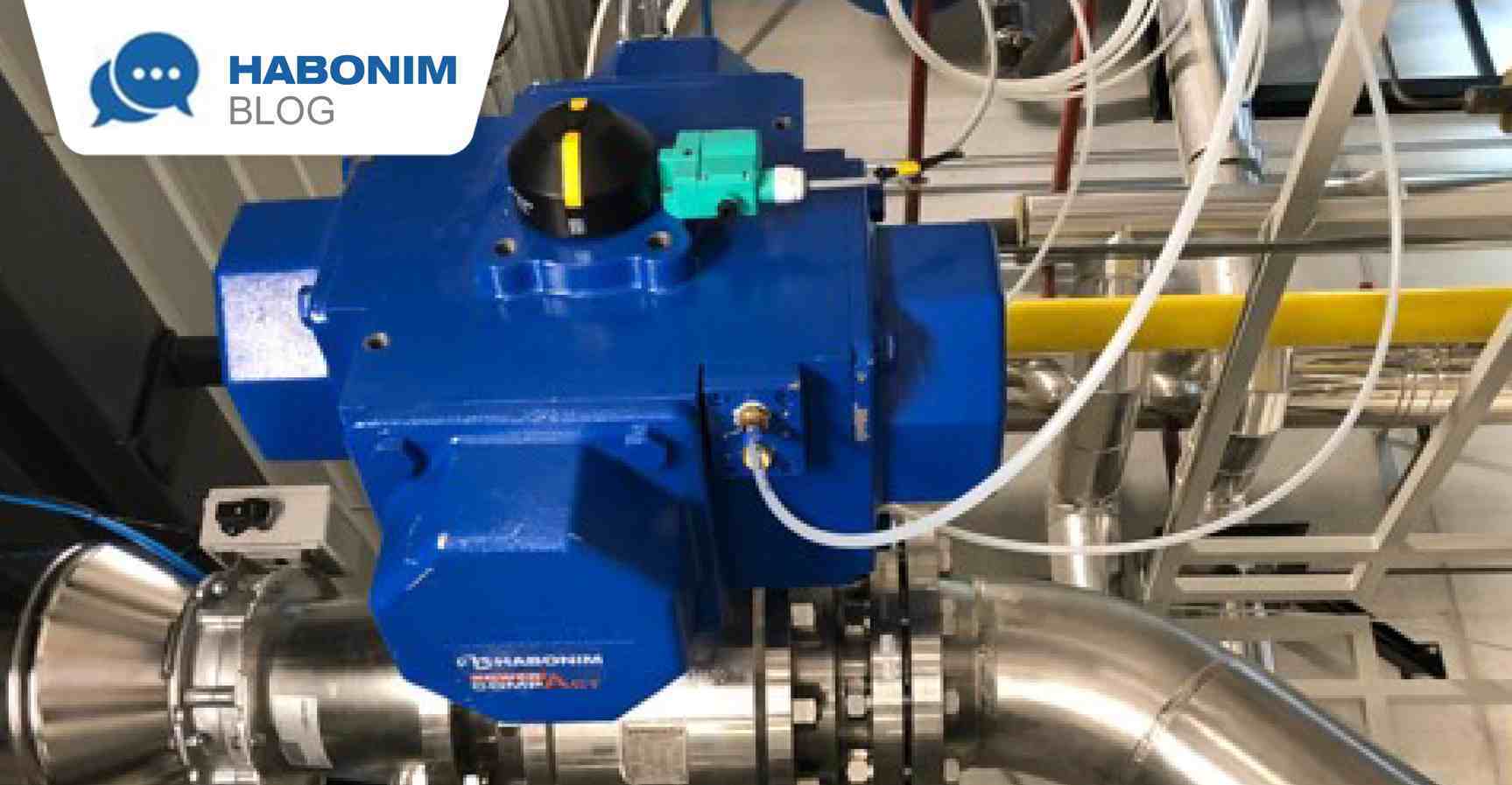
Habonim's CompAct™ pneumatic actuators were developed to meet the challenges of demanding industrial environments where reliability and performance are critical. Designed to deliver high torque output within a compact footprint, CompAct actuators combine fast operation with exceptional durability.
Field-proven in applications requiring continuous operation, CompAct actuators have demonstrated the ability to perform millions of maintenance-free cycles while maintaining consistent performance. Their compact design also allows for easier integration into space-constrained installations without compromising operational capabilities.
Power CompAct™: Superior Actuation Through Innovation
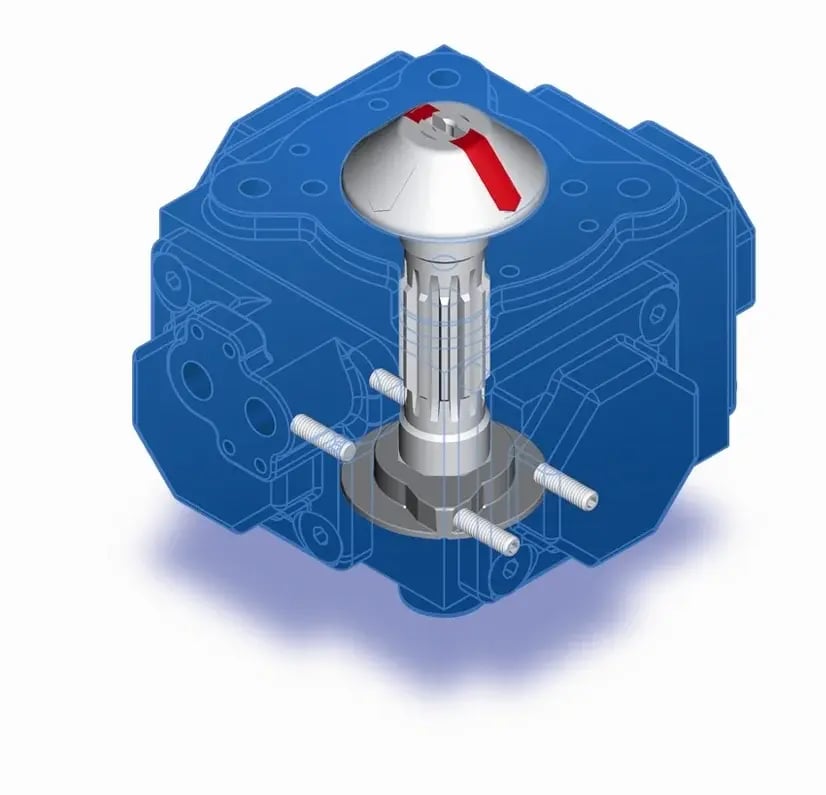
As industrial systems become more sophisticated, actuator performance must continue to improve while minimizing size, weight, and energy consumption. Habonim's patented Power CompAct™ technology addresses these challenges through an innovative four-piston Scotch yoke design.
This advanced technology delivers high torque output from a smaller and lighter actuator package, resulting in reduced compressed air consumption, faster actuation times, and improved reliability in high-cycle applications. The compact design simplifies installation, reduces support structure requirements, and contributes to lower overall system costs.
For facilities seeking maximum performance and long-term reliability, Power CompAct offers an effective solution that balances efficiency, durability, and operational flexibility.
Reliability Starts with the Valve
Even the most advanced actuator can only perform as well as the valve it operates. That is why successful valve automation begins with a valve platform engineered for reliability, safety, and long-term performance.
Habonim's automated valve solutions are built upon decades of expertise in ball valve design and manufacturing, including technologies developed specifically for critical and severe-service applications. A key differentiator is the Total HermetiX™ Integrity Package, which comes standard across Habonim valve platforms.
The package is designed to provide exceptional sealing performance, environmental protection, and operational safety. Its advanced stem sealing technology delivers zero fugitive emissions performance while maintaining long-term reliability with minimal maintenance requirements. Additional features such as double-sealed body construction, fire-safe design, and industry-leading safety certifications help operators meet stringent regulatory and operational requirements.
Together, these technologies contribute to greater process integrity, reduced maintenance costs, and improved operational confidence.
Valve Automation for Hydrogen and LNG Applications
Some of the most demanding valve automation environments can be found within hydrogen and cryogenic processes, where performance, safety, and sealing integrity are essential.
Hydrogen applications require equipment capable of operating under challenging pressures while maintaining reliable sealing performance throughout the system lifecycle. Habonim supports hydrogen processes across the entire supply chain, including production, compression, liquefaction, storage, transportation, and refueling infrastructure. These solutions have been tested and certified for hydrogen service and are trusted by leading equipment manufacturers around the world.
Cryogenic and LNG applications present their own unique challenges, requiring valves and actuators capable of maintaining reliable operation at extremely low temperatures. With more than three decades of experience in cryogenic service, Habonim has developed advanced technologies specifically designed for LNG and other low-temperature applications. These innovations help ensure safe and reliable operation while minimizing maintenance requirements and maximizing service life.
Choosing the Right Valve Automation Partner
Selecting a valve automation package involves much more than simply matching an actuator to a valve. Successful projects require a comprehensive understanding of the application, operating conditions, safety requirements, and long-term performance objectives.
Factors such as valve sizing, torque requirements, environmental conditions, control system integration, and lifecycle support all play an important role in achieving reliable operation. Working with an experienced automation partner helps ensure that every component is optimized for the application and designed to perform under real-world operating conditions.
As a global leader in ball valves and valve automation, Habonim combines decades of engineering expertise with proven technologies that deliver reliable performance in some of the world's most demanding applications.
Frequently Asked Questions
What is valve automation?
Valve automation is the use of actuators and control systems to automatically operate valves without manual intervention, improving efficiency, safety, and process control.
What are the advantages of pneumatic actuators?
Pneumatic actuators provide fast operation, high reliability, simple design, and excellent suitability for demanding industrial environments.
What makes Habonim CompAct actuators different?
CompAct actuators combine powerful performance, compact dimensions, and proven durability, delivering millions of maintenance-free operating cycles in demanding applications.
What is Power CompAct technology?
Power CompAct is Habonim's patented actuator technology that provides high torque output in a smaller and lighter package while reducing air consumption and improving overall system efficiency.
Why is valve and actuator integration important?
Integrated solutions improve reliability, simplify installation, optimize performance, and reduce lifecycle costs by ensuring compatibility between all system components.
Can valve automation be used in hydrogen and LNG applications?
Yes. Modern valve automation solutions are widely used in hydrogen and cryogenic LNG applications where safety, reliability, and performance are critical.
How do electric valve actuators differ from pneumatic ones?
Electric actuators use electric motors and are ideal for applications requiring precise positioning and advanced electronic control. Pneumatic actuators use compressed air and are generally preferred for fast, reliable operation in demanding industrial environments, especially where frequent cycling or hazardous conditions are involved.
What are the main types of actuators used in industrial automation?
The most common industrial actuators are pneumatic, electric, and hydraulic actuators. Each offers different advantages depending on the application's speed, force, precision, and operating environment.
What should I consider when choosing an actuator for a specific application?
Important considerations include required torque, operating speed, available power source, environmental conditions, control system integration, maintenance requirements, and expected lifecycle performance.
Can you explain the role of actuators in automotive systems?
Actuators are also widely used in automotive systems, where they control functions such as throttle operation, braking systems, turbochargers, exhaust gas recirculation (EGR), HVAC systems, and various electronic safety features. Although automotive applications differ from industrial valve automation, both rely on actuators to convert energy into precise mechanical movement that improves performance, efficiency, and safety.
Key Takeaways
- Valve automation improves safety, efficiency, reliability, and process consistency while reducing manual intervention and downtime.
- Actuator selection is critical to system performance and should consider torque, operating speed, available power source, environmental conditions, control requirements, and lifecycle costs.
- Pneumatic actuators are well suited for fast, high-cycle, and demanding industrial applications, while electric actuators offer precise positioning and easier integration with electronic control systems.
- Habonim's CompAct™ and Power CompAct™ actuators are designed to provide high torque, compact dimensions, fast operation, and long-term reliability.
- A reliable automation system depends on proper integration between the valve, actuator, and control system, not on actuator performance alone.
- Advanced valve automation solutions can support demanding applications including hydrogen, LNG, chemical processing, energy, and industrial manufacturing.
Take the Next Step
👉Access the full Actuators brochure
👉 Consult with one of our experts